Moong Dal Toast Recipe – a healthy, protein-rich and flavorful breakfast idea that makes your morning meal both satisfying and wholesome. If you love quick toast recipes but want something more nutritious than your regular butter toast or egg sandwich, this moong toast will become your new go-to. It’s made with a spiced moong dal batter spread over bread slices and toasted until golden and crisp — a perfect vegetarian alternative to the popular egg-based bread omelette.
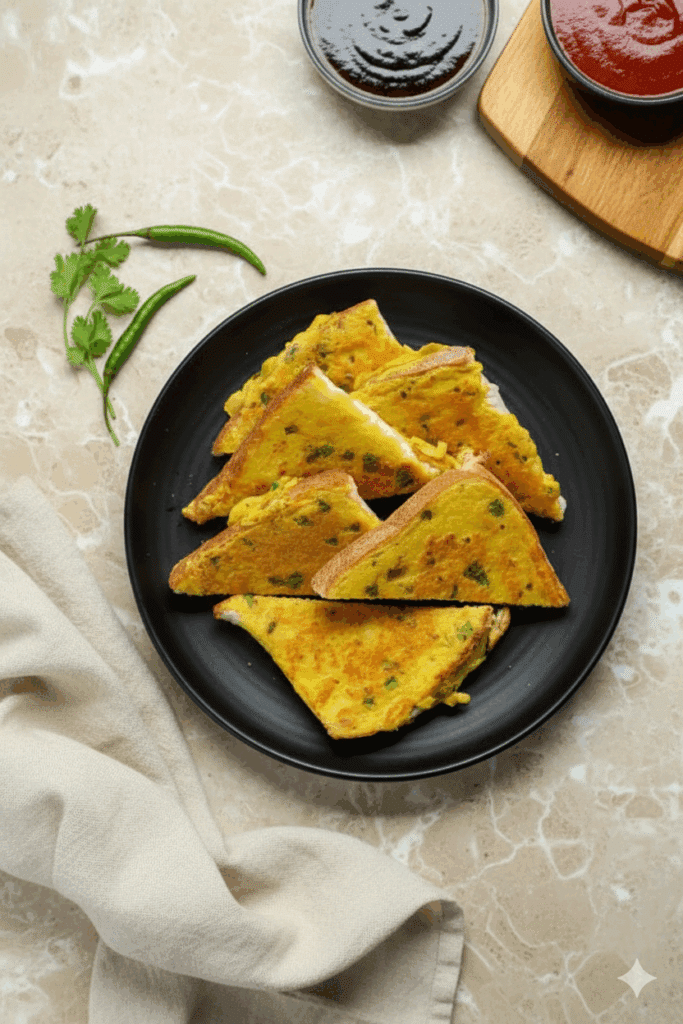
This Indian-style dal toast recipe is ideal for busy mornings when you want something quick, yet nourishing. It’s packed with fiber and plant protein from moong dal and loaded with colorful vegetables that make every bite fresh and delicious. Plus, it’s a great way to sneak more lentils into your diet — even kids love it!
Why You’ll Love This Moong Dal Toast Recipe
If you’re tired of regular sandwiches or omelets, moong dal toast is a refreshing twist. It combines the crisp texture of toasted bread with the earthy flavor of spiced lentil paste. You’ll love this recipe because:
- ✅ It’s high in protein and low in fat.
- ✅ Completely egg-free and vegan-friendly.
- ✅ Ready in under 30 minutes (apart from soaking time).
- ✅ Great for breakfast, brunch, or even as a snack.
- ✅ Easy to customize with your favorite vegetables or spices.
This toast is versatile, wholesome, and guaranteed to keep you full for hours — no mid-morning hunger pangs!
Inspiration Behind the Recipe
This moong dal toast recipe was born out of the need for a quick breakfast that’s both tasty and nutritious. It’s inspired by the classic besan toast and moonglet — two popular Indian street foods — but with a healthy homemade twist.
Instead of chickpea flour or a thick moonglet pancake, this recipe uses soaked moong dal blended into a smooth paste. The batter is then seasoned with spices and fresh veggies to add flavor, texture, and color. When spread over bread and toasted, it creates a crisp, golden crust with a soft, savory inside — somewhat like an omelet but entirely plant-based!
Tips Before You Begin
Before we dive into the step-by-step method, here are some helpful tips to make your moong toast turn out perfect every time:
- Choose the right bread – White sandwich bread works best for this recipe. It gives a crisp texture and holds the batter well. Brown, wheat, or multigrain bread can be used, but they tend to absorb more moisture and may not get as crisp.
- Soak properly – Make sure to soak moong dal for at least 1 hour in warm water. If you have time, soaking overnight will make blending even easier and yield a smoother batter.
- Add eno just before toasting – Eno (fruit salt) gives the batter lightness and makes the toast fluffier. Mix it in small batches right before cooking.
- Customize your veggies – Don’t stop at onion, carrot, and capsicum! Try adding finely chopped bell peppers, tomatoes, corn, or even spinach. The more colorful your mix, the more appealing the toast looks — especially for kids.
- Cook on medium flame – Toast slowly so the batter cooks through without burning the bread. You’ll get that perfect golden crust and soft interior.
Step-by-Step Guide: How to Make Moong Toast
Step 1: Soak and Blend the Dal
Start by soaking 1 cup of moong dal (split yellow lentils) in hot water for about an hour. Once soaked, drain off the excess water and transfer the dal to a blender. Add 2 green chilies and blend to form a smooth, thick paste. If needed, add 1–2 tablespoons of water to help it blend evenly.
Step 2: Season the Batter
Transfer the moong dal paste into a large mixing bowl. Add:
- ¼ tsp turmeric powder
- ½ tsp salt
- ¼ tsp black pepper powder
- A pinch of asafoetida (hing)
Mix everything well until you get a uniform batter. This is your base mixture.
Step 3: Add Vegetables
Next, fold in your chopped veggies for crunch and flavor:
- ½ finely chopped onion
- ½ grated carrot
- ½ chopped capsicum
- 2 tbsp fresh coriander leaves
Stir to combine. The mixture should be thick and spreadable — not too watery.
Step 4: Activate the Batter
Just before you’re ready to toast, scoop out about two ladlefuls of batter into a small bowl and mix in ¼ tsp of eno (fruit salt). Stir gently until combined — you’ll notice tiny bubbles forming, which makes the toast light and airy.
Print
Moong Dal Toast Recipe | Easy Moong Toast | How to Make Dal Toast at Home
- Total Time: 1 hr 20 min
Ingredients
1 cup moong dal (split yellow lentils)
2 green chilies
¼ tsp turmeric powder
¼ tsp black pepper powder
½ tsp salt (or to taste)
A pinch of asafoetida (hing)
½ onion, finely chopped
½ carrot, grated
½ capsicum, finely chopped
2 tbsp fresh coriander, chopped
¼ tsp eno (fruit salt)
6 slices bread (white or brown)
Butter or oil, for toasting
Instructions
-
Soak Dal:
In a large bowl, soak 1 cup of moong dal in hot water for about 1 hour. -
Blend:
Drain and transfer to a blender with 2 green chilies. Blend into a smooth, thick paste using minimal water. -
Season:
Pour the paste into a bowl. Add turmeric, salt, pepper, and hing. Mix well to combine. -
Add Veggies:
Stir in chopped onion, carrot, capsicum, and coriander leaves. Mix into a thick, spreadable batter. -
Activate:
Scoop 2 ladles of batter into a smaller bowl, add ¼ tsp eno, and mix gently. -
Toast:
Heat a skillet and apply butter on both sides of the bread. Spread the moong dal batter on one side and place it on the hot tawa.
Toast until golden, then spread batter on the other side and flip. Cook both sides until crisp. -
Serve:
Enjoy hot moong dal toast with butter, chutney, or ketchup.
Notes
- To make it vegan, replace butter with olive oil or vegan spread.
- For a softer version, cover the pan with a lid for a minute to let the steam cook the batter inside.
- The batter can also be used as a base for savory pancakes or mini fritters.
- Always mix eno right before cooking to keep the batter airy.

I’m a passionate home cook sharing easy, flavorful recipes inspired by my roots and travels — bringing a splash of joy and global taste to every family meal.