Reishi Mushroom Ramen Bowl is a nourishing and soul-warming soup packed with superfoods, flavors, and comfort. Over the years, quick and simple ramen bowls have become a staple for many looking for a hearty, adaptable meal. This version combines the healing properties of reishi mushrooms with easy-to-find ingredients, creating a bowl that can be vegetarian, gluten-free, or adapted to whatever you have in your kitchen.
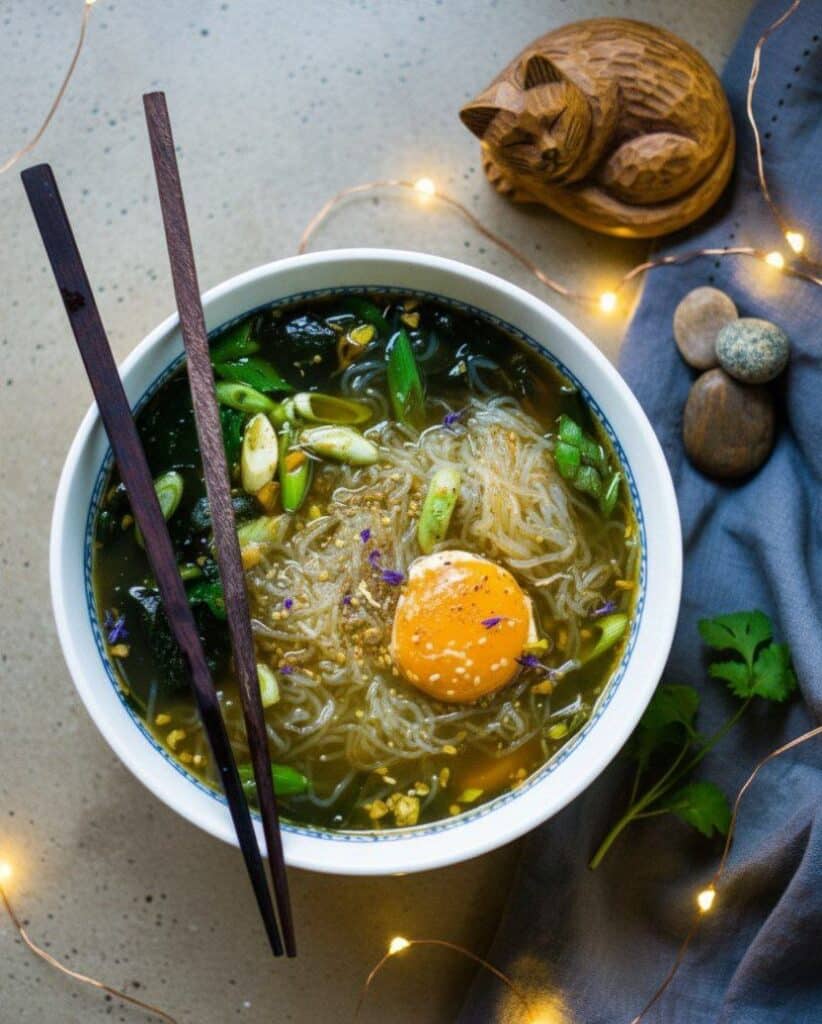
This recipe isn’t traditional Japanese ramen—it’s more of a flexible, “make-it-your-own” version. The beauty of this bowl is that missing an ingredient won’t stop you; it’s about layering flavors and nourishing your body with what you have.
Why Reishi Mushrooms Make This Ramen Special
Reishi mushrooms are well-known for their adaptogenic benefits. Incorporating them into soups, broths, and other dishes can elevate a simple meal into something restorative. Some of the amazing benefits of reishi include:
- Calming the nervous system
- Supporting adrenal health
- Reducing inflammation
- Promoting overall wellness
Using reishi in a ramen bowl is an effortless way to include this healing mushroom in your diet. You can find powdered reishi blends or dried forms from reputable suppliers. Just a teaspoon added to your broth can amplify the health benefits of your soup without overpowering the flavor.
Building a Flavorful Broth
The foundation of any good ramen is the broth. You can use bone broth, vegetable broth, or even a simple store-bought version if you’re short on time. The key is to build layers of flavor with aromatics and spices. In this recipe, turmeric, ginger, and garlic provide warmth and anti-inflammatory benefits, while carrots add subtle sweetness and additional nutrients.
Adding wakame seaweed gives a hint of umami and enhances the mineral content of the soup. Feel free to substitute with spinach, bok choy, or kale if that’s what you have available. The flexibility of this recipe allows you to tailor it to your taste and pantry staples.
Choosing Noodles and Protein
The noodles in your ramen can vary based on preference and dietary needs. Low-carb miracle noodles work well, but traditional ramen noodles or rice noodles are excellent options too. A soft-boiled or poached egg is a classic addition, bringing richness and extra protein to the bowl. Eggs can be skipped or substituted with tofu for a fully plant-based option.
Flavor Boosters and Garnishes
The secret to an unforgettable bowl of ramen lies in the garnishes and seasoning. Tamari or soy sauce adds the classic umami taste. Red chili flakes, scallions, sesame seeds, or seaweed seasoning can elevate both the taste and appearance of the soup. Each addition is optional, making it easy to customize based on your preferences.
Adding reishi mushroom powder at the end ensures the soup retains its healing properties without being overcooked. This final touch transforms a simple noodle soup into a restorative, adaptogenic meal.
How to Make Reishi Mushroom Ramen Bowl
Start by heating turmeric, ginger, garlic, and carrots in a pan until soft and fragrant. While the vegetables are cooking, prepare your noodles and eggs. Miracle noodles only need rinsing and draining, while traditional noodles may need boiling. Soft-boiled eggs can be prepared by cooking for 6–7 minutes and cooling in an ice bath.
Once the aromatics are ready, combine them with your broth in a pan and gently warm. Add the soaked wakame or chosen greens, followed by the reishi mushroom powder. Let everything simmer briefly so the flavors meld together.
Divide the cooked noodles between serving bowls, pour the hot broth over them, and top with eggs and your chosen garnishes. Each bite is warm, comforting, and packed with flavor and nutrients.
Adaptable Ingredients for Every Kitchen
This ramen bowl is meant to be flexible. Here are some ideas for substitutions or additions:
- Vegetables: Celery, radish, onions, mushrooms, or leafy greens
- Noodles: Rice noodles, udon, soba, or spiralized vegetables
- Protein: Tofu, tempeh, or extra eggs
- Seasonings: Hot sauce, chives, sesame oil, or miso paste
- Superfoods: Other adaptogenic mushrooms or powders
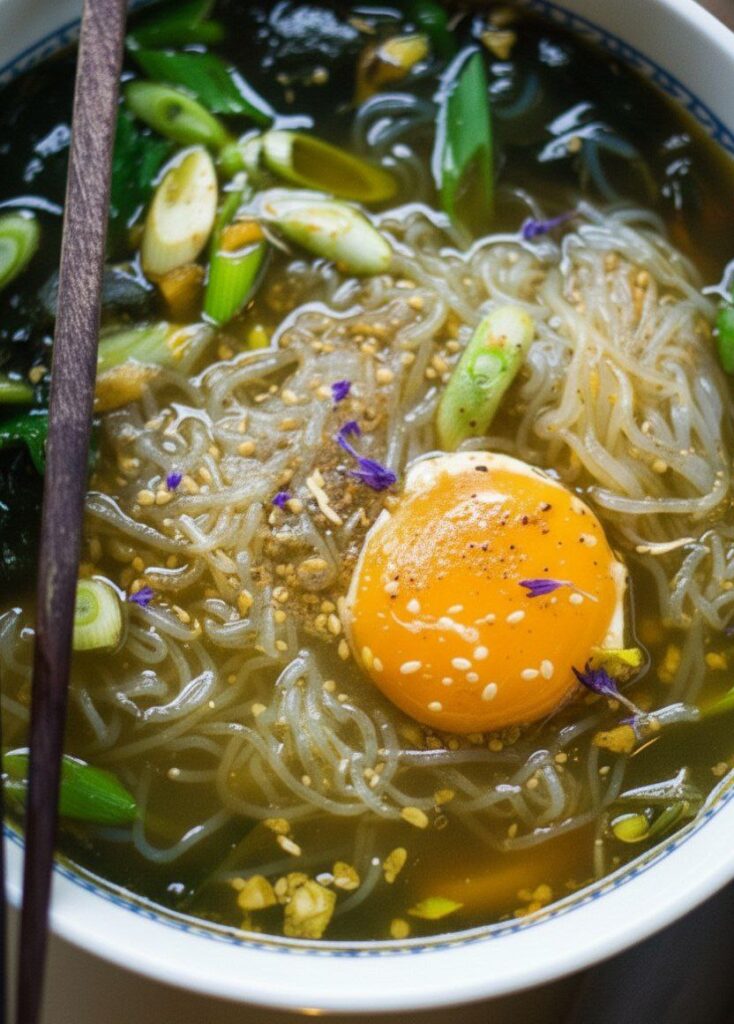
With these variations, you can create a nourishing meal even when your pantry is limited.
Print
Healing Reishi Mushroom Ramen Bowl: A Comforting, Nutrient-Rich Soup
- Total Time: 15 min
Ingredients
2 cups bone broth or vegetable broth
1 pack miracle noodles or ramen noodles of choice
2 soft-boiled or poached eggs
1 medium carrot, chopped
2 tablespoons dried wakame seaweed
1 inch turmeric root, minced (or 1 tsp turmeric powder)
1 inch fresh ginger, minced (or 1 tsp ginger powder)
2 garlic cloves, minced
1 teaspoon reishi mushroom powder or blend
1 tablespoon tamari, soy sauce, or coconut aminos
1 scallion, chopped for garnish
Sprinkle of gomasio or seaweed seasoning
Red chili flakes for garnish (optional)
Instructions
- Heat a pan over medium heat and sauté turmeric, ginger, garlic, and chopped carrots until softened and fragrant.
- While vegetables are cooking, prepare the noodles according to package instructions. If using miracle noodles, rinse and drain.
- In a separate pot, prepare soft-boiled or poached eggs. Cook for 6–7 minutes for soft yolks, then transfer to an ice bath to stop cooking.
- Pour the broth into the pan with sautéed vegetables. Add the soaked wakame and stir to combine.
- Mix in the reishi mushroom powder and tamari. Allow the broth to warm for a few minutes, then remove from heat.
- Divide the cooked noodles between two bowls. Pour the hot broth and vegetable mixture over the noodles.
- Add the eggs to each bowl, then garnish with chopped scallions, gomasio, and red chili flakes or any other toppings you prefer.
- Serve immediately and enjoy a warm, healing, and nourishing ramen bowl.
Notes
- Vegetarian Option: Use vegetable broth and skip eggs or substitute with tofu.
- Noodle Alternatives: Rice noodles, udon, soba, or spiralized vegetables can be used depending on preference.
- Superfood Boost: Add other adaptogenic mushrooms like chaga or lion’s mane for extra healing properties.
- Storage: Leftover broth can be refrigerated for 2–3 days or frozen for longer storage. Noodles are best cooked fresh to maintain texture.
- Prep Time: 5 min
- Cook Time: 10 min

I’m a passionate home cook sharing easy, flavorful recipes inspired by my roots and travels — bringing a splash of joy and global taste to every family meal.